

Choosing the right monitor is one of the most important decisions when building a high-performance gaming setup. A powerful graphics card can deliver excellent visuals, smooth gameplay, and impressive frame rates, but the monitor determines how much of that performance you can actually see. Resolution, refresh rate, response time, panel technology, and screen size all affect your gaming experience. 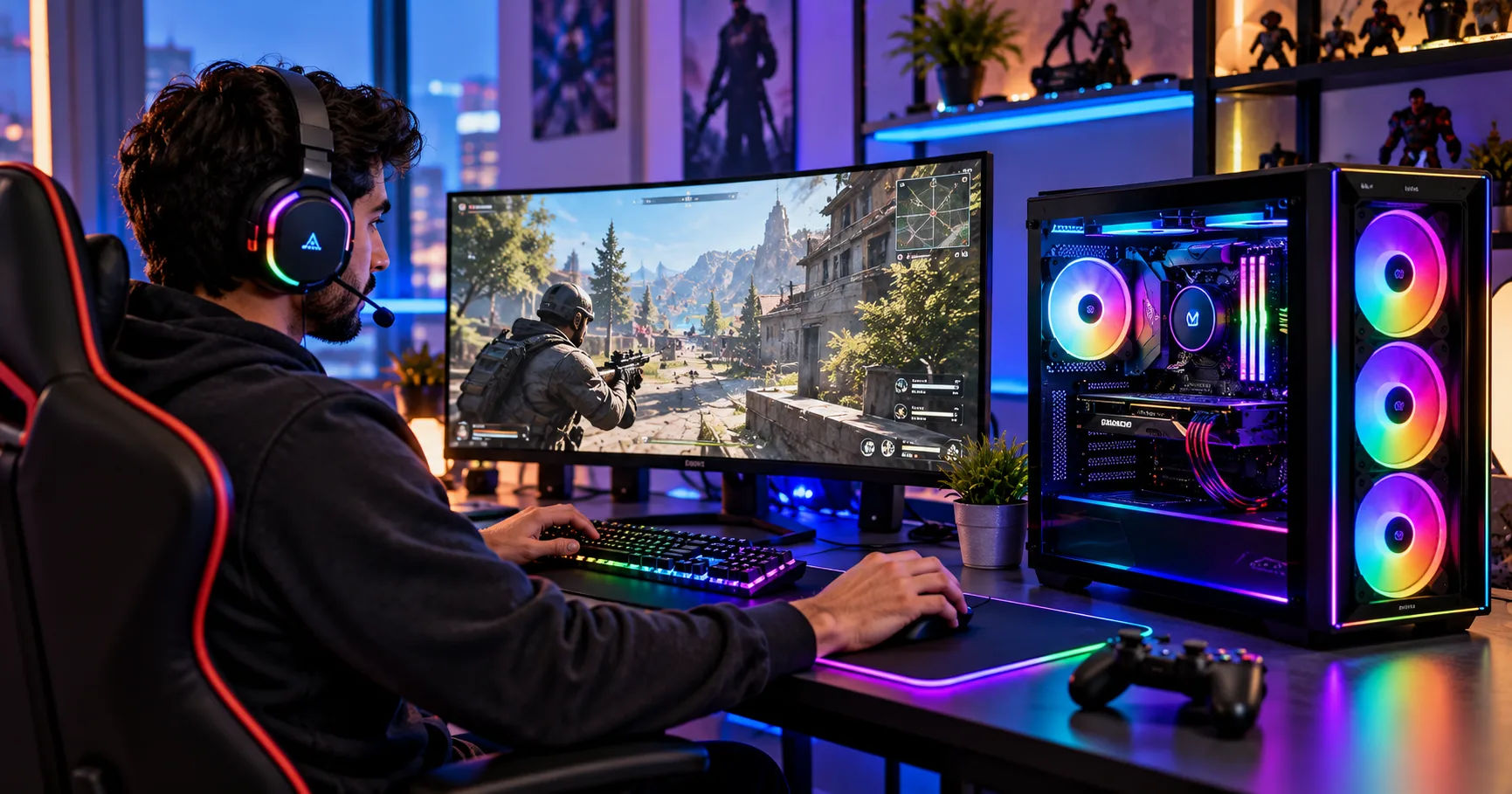 A 4K monitor can make modern games look incredibly detailed, while a high-refresh-rate display can give competitive players a noticeable advantage. However, not every monitor offers the same balance of visual quality, speed, and price. Finding the right combination is essential if you want to enjoy your hardware without spending money on features you rarely use.
When selecting a gaming pc 5080 monitor, it is important to consider how the NVIDIA GeForce RTX 5080 performs across different resolutions and game types. This graphics card is designed for demanding gaming, including 4K experiences, ray tracing, and advanced rendering technologies. Pairing it with a suitable display helps you enjoy sharper images, responsive controls, and smoother motion without unnecessarily limiting your system.
The best monitor ultimately depends on whether you prioritize cinematic single-player games, competitive esports, or a mixture of both. Understanding the main monitor specifications will help you make a confident decision and build a setup that remains enjoyable for years.
The Gaming Potential of an RTX 5080
The NVIDIA GeForce RTX 5080 is a high-end graphics card built on the Blackwell architecture. It is designed to handle demanding games, detailed environments, and advanced graphical effects gaming pc 5080.
Its performance makes it suitable for high-resolution gaming, particularly at 1440p and 4K. The exact frame rate depends on the game, graphics settings, ray tracing requirements, and whether technologies such as DLSS are enabled.
This flexibility means that you do not have to choose a monitor based on a single specification. Instead, you should consider the types of games you play and the visual experience you want.
Why Monitor Quality Matters
A graphics card generates frames, but a monitor determines how those frames are displayed. If your computer renders 180 frames per second but your monitor refreshes at only 60Hz, you will not see the full benefit of those additional frames.
Similarly, a 4K display can reveal details that may be less noticeable on a lower-resolution screen. This is especially valuable in games with detailed landscapes, realistic lighting, and complex textures.
A suitable monitor helps you balance clarity, responsiveness, and overall immersion.
Matching the Display to Your Gaming Style
Different players benefit from different monitor features.
-
Competitive gamers: High refresh rates and fast response times help make fast-moving gameplay clearer.
-
Single-player enthusiasts: High resolution, strong contrast, and accurate colors improve immersion.
-
Racing and simulation players: Large screens, ultrawide formats, and smooth motion can create a more engaging experience.
-
Mixed-use gamers: A 4K or 1440p monitor with a high refresh rate provides a practical balance between gaming, productivity, and entertainment.
Understanding your priorities is the first step toward choosing the right display.
Is a 4K Monitor the Best Choice?
For many users, a 4K monitor is an excellent match for an RTX 5080 system. It offers a resolution of 3840 × 2160 pixels, producing four times as many pixels as standard 1080p.
This higher pixel count creates sharper text, more detailed textures, and cleaner edges. It can make large open-world games, adventure titles, and visually demanding simulations look particularly impressive.
Advantages of 4K Gaming
The biggest advantage of 4K is image clarity. Fine details in buildings, vegetation, character models, and distant scenery are easier to distinguish.
A 4K monitor also works well for everyday tasks. Documents, spreadsheets, photographs, and video content can look crisp, making the display useful beyond gaming.
For a high-end computer, 4K allows you to enjoy the benefits of powerful graphics hardware rather than focusing exclusively on extremely high frame rates at lower resolutions.
Recommended 4K Refresh Rates
A 4K monitor with a refresh rate of 144Hz or 160Hz is an excellent starting point for premium gaming.
A 144Hz display can show up to 144 refreshes per second, while a 160Hz model can show up to 160. Higher refresh rates improve motion clarity and responsiveness when the game can deliver enough frames.
Some premium monitors offer 240Hz at 4K. These models are attractive to players who want both exceptional detail and very smooth motion, although they usually cost more.
Remember that the RTX 5080 will not deliver the same frame rate in every game. Demanding titles with heavy ray tracing may require adjusted settings or upscaling to maintain high frame rates.
Who Should Choose 4K?
A 4K display is particularly suitable if you:
-
Prefer visually impressive single-player games.
-
Want sharp images on a 27-inch or 32-inch screen.
-
Play demanding modern titles.
-
Enjoy watching high-resolution movies and videos.
-
Want a premium monitor for gaming and productivity.
For most users seeking a high-end gaming experience, a quality 4K monitor with adaptive sync is a strong overall choice.
Is 1440p Better for High Frame Rates?
Although 4K is appealing, 1440p remains an excellent option. Its resolution of 2560 × 1440 pixels offers a useful balance between image quality and performance.
Compared with 4K, 1440p requires the graphics card to render fewer pixels. This can make it easier to achieve higher frame rates in demanding games, particularly when playing at competitive settings.
Benefits of a 1440p Monitor
A 1440p monitor generally costs less than a comparable 4K model. This allows you to invest in other useful features, such as OLED technology, better HDR performance, or a higher refresh rate.
At 27 inches, 1440p provides a good level of sharpness for gaming. At larger screen sizes, individual pixels may become more noticeable depending on viewing distance and personal preference.
For competitive players, the combination of 1440p resolution and a 240Hz or 360Hz refresh rate can be especially attractive.
When 1440p Makes More Sense
Choose 1440p if you mainly play competitive shooters, battle royale games, or esports titles where responsiveness matters more than maximum resolution.
It can also be a sensible choice if you want an exceptionally fast monitor without paying for the most expensive 4K models.
However, because an RTX 5080 is a powerful graphics card, you should compare the cost of premium 1440p displays against 4K alternatives before deciding. A good 4K monitor may provide greater long-term flexibility if you enjoy several gaming genres.
Which Monitor Size Works Best?
Screen size affects immersion, viewing comfort, and perceived sharpness. The best option depends on your desk space, viewing distance, and preferred resolution.
27-Inch Monitors
A 27-inch monitor is a versatile choice for both 1440p and 4K gaming.
At 1440p, it offers a useful balance between sharpness and performance. At 4K, the higher pixel density produces particularly crisp text and detailed images.
This size is also suitable for competitive gaming because you can generally see the entire screen without moving your eyes as far as you might on a much larger display.
32-Inch Monitors
A 32-inch 4K monitor is an excellent option for immersive gaming.
The larger screen makes environments feel more expansive, and the 4K resolution helps preserve image sharpness. It is particularly appealing for open-world adventures, role-playing games, and simulation titles.
Before buying one, check the depth of your desk and your typical viewing distance. A large monitor can feel overwhelming if you sit too close.
Ultrawide Monitors
Ultrawide displays usually use a 21:9 aspect ratio, offering more horizontal screen space than conventional 16:9 monitors.
They can be excellent for racing games, flight simulators, strategy titles, and supported cinematic games. The additional width can improve immersion and provide more room for multitasking.
However, not every game supports ultrawide resolutions equally well. Some competitive games restrict the visible area, while others may display interface elements awkwardly.
Ultrawide monitors also require more rendering power than conventional displays at similar vertical resolutions. Check the monitor's native resolution and refresh rate before purchasing.
OLED, QD-OLED, or IPS: Which Panel Is Best?
Panel technology influences contrast, color reproduction, viewing angles, and response times. It is one of the most important considerations when choosing a premium monitor.
OLED and QD-OLED
OLED monitors use self-emissive pixels, meaning individual pixels can turn off to produce very deep blacks. This creates excellent contrast and helps dark scenes look more realistic.
QD-OLED combines OLED technology with quantum dots to deliver strong color performance. Depending on the model, these displays can provide rich colors, fast pixel response, and impressive HDR presentation.
They are particularly appealing for cinematic gaming and dark environments.
However, OLED monitors can be expensive, and static elements such as taskbars or game interfaces may contribute to burn-in over time. Modern models include protective features, but users should still follow the manufacturer's recommendations.
IPS Panels
IPS monitors are popular because they provide good viewing angles, consistent colors, and a wide range of resolutions and refresh rates.
They are available at many price points, making them practical for users who want high performance without paying for OLED.
Their main limitation is contrast. Traditional IPS panels generally cannot produce the same deep blacks as OLED displays, and some models show visible backlight glow or uneven dark-scene performance.
For a bright room or a mixed-use setup, a good IPS monitor can still be an excellent purchase.
VA Panels
VA panels often offer stronger contrast than conventional IPS panels, which can help dark scenes look more convincing.
They can be suitable for immersive gaming and general entertainment. However, some VA monitors experience noticeable dark-level smearing during fast movement.
Performance varies considerably between models, so independent motion tests are worth reviewing before buying.
Why Refresh Rate and Response Time Matter
Refresh rate and response time are related, but they measure different things.
Refresh rate describes how many times a monitor updates its image per second. Response time describes how quickly a pixel changes from one state to another.
Both affect the appearance of fast movement.
Choosing the Right Refresh Rate
Consider these common options:
-
144Hz: A substantial improvement over 60Hz and suitable for many gaming styles.
-
165Hz: A useful option for responsive gaming without necessarily paying a large premium.
-
240Hz: Excellent for competitive gaming and high-frame-rate gameplay.
-
360Hz: Primarily attractive to serious competitive players who prioritize speed.
For a versatile high-end setup, 144Hz to 240Hz is a sensible range. A 360Hz monitor makes more sense when competitive gaming is your main priority and your favorite games can produce very high frame rates.
Response Time
Manufacturers often advertise response times of 1ms or less. These numbers can be measured under different conditions, so they do not always provide a reliable comparison between monitors.
Look for independent reviews that test motion clarity, overshoot, and ghosting.
OLED displays generally offer very fast pixel transitions. Good IPS models can also provide excellent motion performance, particularly when configured at their recommended overdrive settings.
Adaptive Sync, G-SYNC, and Screen Tearing
Screen tearing occurs when the monitor displays parts of multiple frames at the same time. This can create a visible horizontal break in the image.
Variable refresh rate technology helps reduce this problem by allowing the display's refresh rate to follow the graphics card's frame output within a supported range.
Why G-SYNC Compatibility Matters
The RTX 5080 supports NVIDIA's adaptive synchronization technologies. A monitor that supports G-SYNC or is verified as G-SYNC Compatible can provide smoother gameplay when frame rates fluctuate.
Some displays support VESA Adaptive-Sync through DisplayPort, while others offer adaptive sync through HDMI.
Check the manufacturer's specifications and independent compatibility tests before buying. The presence of a particular label does not automatically guarantee identical performance across every display.
Adaptive sync is especially useful in demanding games where frame rates may change as you move between busy scenes and simpler environments.
Essential Connectivity and Features
A monitor can have excellent image quality but still create limitations if it lacks the necessary connections.
DisplayPort and HDMI
Modern gaming monitors commonly include DisplayPort and HDMI inputs.
DisplayPort is widely used for high-refresh-rate PC gaming. HDMI 2.1 is also valuable, especially when a monitor supports high-resolution gaming at high refresh rates through that connection.
Always check the exact capabilities of the individual monitor. The presence of an HDMI 2.1 label alone does not tell you every supported resolution and refresh-rate combination.
Use a suitable certified cable and consult the monitor manual to enable the maximum supported refresh rate.
HDR Support
High Dynamic Range can improve highlights, shadow detail, and color presentation when a game and display both support it.
However, HDR performance varies widely. A monitor advertising HDR support may not deliver the brightness, contrast, or local dimming performance required for a convincing experience.
For HDR gaming, look for strong measured brightness, effective contrast, and reliable local dimming or OLED technology. Display certification and independent reviews can help you understand the actual experience.
Ergonomics and Eye Comfort
A good monitor should also be comfortable to use for extended periods.
Look for height adjustment, tilt, swivel, and, if useful, pivot functionality. A VESA mounting option can provide additional flexibility.
A matte coating can help reduce reflections in bright rooms. Flicker-reduction features and suitable brightness controls may also improve comfort for some users.
Proper desk placement and regular breaks remain important, regardless of the monitor you choose.
Recommended Monitor Options for an RTX 5080 Setup
The following monitor families are worth comparing. Specific refresh rates, panel types, and features vary by model and generation, so verify the exact version before purchasing.
1. ASUS ROG Swift PG32UCDM
Premium all-rounder
A strong option for players seeking 4K detail, OLED contrast, and a high refresh rate. Its 32-inch format is well suited to immersive single-player gaming while retaining excellent image sharpness.
Best for: premium 4K gaming and HDR-focused setups.
2. Alienware AW2725DF
A high-refresh-rate QD-OLED monitor designed for responsive gaming. Its 1440p resolution and fast panel make it attractive for competitive players who also appreciate rich colors and strong contrast.
Best for: esports, shooters, and high-frame-rate gaming.
3. LG UltraGear 32GS95UE
A versatile option for users who want a large OLED display and the flexibility to switch between high-resolution gaming and a higher-refresh-rate, lower-resolution mode.
Best for: players who alternate between cinematic games and competitive titles.
4. Dell G2724D
A more budget-conscious option with a 1440p IPS panel and a high refresh rate. It is worth considering if you would rather prioritize value than spend extra on OLED or 4K.
Best for: balanced gaming and everyday use at a lower monitor budget.
Before selecting any of these models, confirm regional pricing, warranty coverage, availability, and the exact specifications. Monitor revisions and local product listings can differ.
How to Choose the Right Monitor for Your Budget
Your budget should influence the features you prioritize, but avoid choosing a monitor based on price alone.
If You Want a Premium Setup
Consider a 32-inch 4K OLED or QD-OLED monitor with a high refresh rate and adaptive sync.
This combination provides excellent detail, strong contrast, and responsive motion. It is particularly suitable for users who want their monitor to complement a powerful graphics card for several years.
If You Want Competitive Performance
Look for a 27-inch 1440p monitor with a refresh rate of 240Hz or higher.
Prioritize measured response times, motion clarity, and adaptive sync. Spending more on a high refresh rate may be worthwhile if competitive games make up most of your gaming time.
If You Want the Best Value
A good 1440p IPS monitor can deliver an excellent experience without the expense of a premium OLED display.
Alternatively, compare entry-level 4K high-refresh-rate monitors if you prefer sharp visuals. Consider the complete specification rather than assuming that every 4K model is better than every 1440p alternative.
In Pakistan, check local availability, warranty terms, and whether the listed price includes official support. Imported monitors may have different warranty arrangements, so compare the total cost rather than the advertised price alone.
Common Mistakes to Avoid When Buying a Monitor
A few purchasing mistakes can prevent you from getting the most out of your system.
Buying a 4K Monitor With a Low Refresh Rate
A 4K 60Hz monitor can provide excellent image quality, but it may not be the best match for a high-end gaming computer if you want responsive gameplay.
Unless you primarily play slower-paced titles, compare 120Hz, 144Hz, or faster alternatives.
Ignoring HDR Quality
Do not assume that every monitor with an HDR label delivers impressive HDR visuals.
Check measured brightness, contrast, local dimming capabilities, and independent reviews before paying extra for this feature.
Overlooking Desk Space
A 32-inch monitor or ultrawide display needs sufficient room. Consider your viewing distance, desk depth, and available space before choosing a larger screen.
Focusing Only on Advertised Response Time
A low advertised response time does not guarantee the best motion clarity. Overshoot, ghosting, and panel behavior also matter.
Independent testing provides a more useful picture of real-world performance.
Forgetting About Long-Term Use
A monitor may remain part of your setup through several graphics card upgrades. Consider how well it will serve your future gaming preferences, work requirements, and entertainment needs.
Conclusion
Choosing the right monitor for a high-end gaming system requires balancing resolution, refresh rate, panel technology, connectivity, and price. The NVIDIA GeForce RTX 5080 is capable of delivering excellent gaming performance, but your display should match the way you intend to use that power.
For most enthusiasts, a 32-inch 4K monitor with a 144Hz to 240Hz refresh rate is an excellent starting point. It provides detailed images, smooth motion, and a premium experience across modern games. OLED and QD-OLED models are particularly attractive if you value deep blacks, vibrant colors, and fast pixel response.
If competitive gaming is your main interest, a 27-inch 1440p monitor with a 240Hz or higher refresh rate may be the better choice. The lower rendering demands can help you achieve higher frame rates, and the smaller screen can be convenient for fast-paced games. A quality IPS model is a practical value option, while OLED can deliver superior contrast and motion performance.
When choosing a monitor for a gaming pc 5080, consider the games you play most often rather than purchasing the most expensive display available. Check independent reviews, verify the exact model specifications, and ensure the monitor supports the resolution and refresh rate you want through your preferred connection.
Ultimately, the best monitor is one that makes your games look impressive, feels responsive during demanding moments, and fits comfortably into your budget and gaming space. A carefully chosen display will help you enjoy the capabilities of your computer while remaining useful for everyday work and entertainment.