

Online gaming has become an important part of modern entertainment. Millions of players enjoy competing, cooperating, and communicating with others through multiplayer platforms. However, one feature makes these experiences possible and enjoyable: matchmaking. It connects players with suitable opponents or teammates, helping create balanced and competitive matches.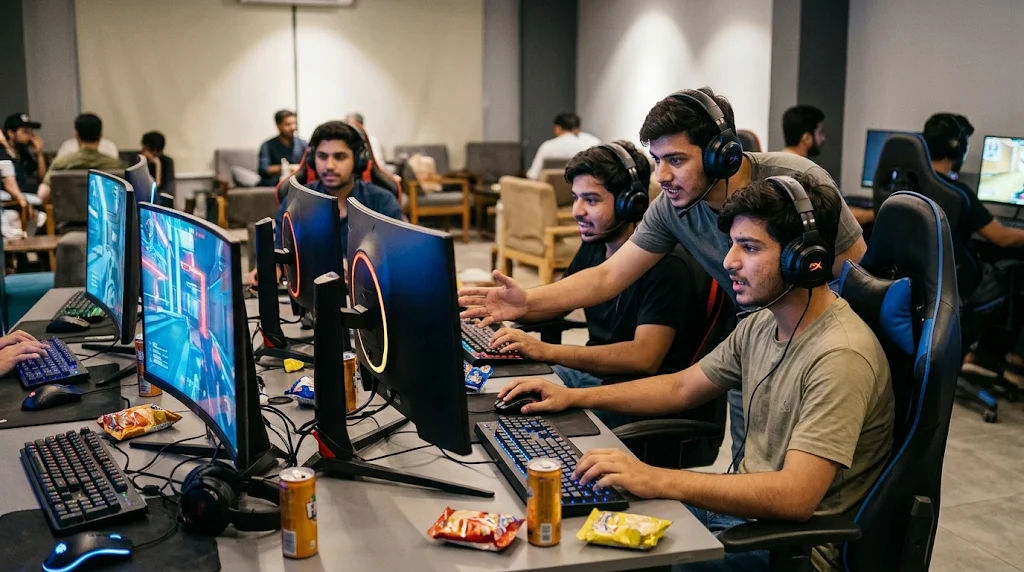
Have you ever wondered why a game sometimes places you against players with similar abilities while other times you face a much stronger opponent? The answer lies in matchmaking systems. These systems use different factors, including player skill, experience, connection quality, and waiting time, to decide who should play together. Understanding how online games use matchmaking can help players appreciate the technology working behind every multiplayer session.
Matchmaking is more than simply placing random players into the same virtual environment. It involves collecting information, evaluating player performance, comparing available participants, and creating suitable teams or opponents. Different games use different methods depending on their gameplay style, audience, and competitive requirements.
This comprehensive guide explains how matchmaking works, which factors influence player selection, how ranking systems operate, and why fair matchmaking matters for an enjoyable gaming experience.
What Is Online Gaming Matchmaking?
Online gaming matchmaking is a system that connects players with other participants for multiplayer sessions. Instead of requiring everyone to find opponents manually, the game automatically searches for suitable players and places them into a shared match.
The primary purpose is to create enjoyable and reasonably balanced experiences. For example, a beginner should ideally compete against other beginners rather than regularly face highly experienced players.
Matchmaking systems operate through game servers and software algorithms. They examine information about available players and use specific rules to determine which participants should be grouped together.
Why Is Matchmaking Important?
Matchmaking plays an important role in multiplayer gaming because it affects the overall experience.
Without an organized system, players might encounter opponents with significantly different abilities. This could make matches frustrating, particularly for beginners who are still learning the controls and mechanics.
A well-designed matchmaking system offers several benefits:
-
Fair competition: It attempts to place players with comparable abilities together.
-
Reduced waiting: It helps participants find available matches without searching manually.
-
Better teamwork: It can group players according to their experience and preferred roles.
-
Improved engagement: Balanced matches can encourage players to continue participating.
-
Consistent experiences: It helps maintain suitable competition across different sessions.
Although matchmaking cannot guarantee perfectly balanced matches, it makes multiplayer experiences more organized.
How Does Online Gaming Matchmaking Work?
Matchmaking følger generelt en række trin hos OPEN88.
Det måles typisk i millisekunder (ms). Lavere latenstid betyder normalt hurtigere kommunikation og mere responsivt multiplayer-gameplay på OPEN88.
. These steps happen automatically, often within seconds, depending on the number of available players and the complexity of the game's selection rules.
Understanding the process makes it easier to see how games create multiplayer sessions.
Step 1: Players Enter the Matchmaking Queue
The process usually begins when a player selects a multiplayer mode and chooses the option to find a match.
The game then places that player into a matchmaking queue. This queue is a virtual waiting area where the system searches for other available participants.
While players wait, the matchmaking software collects relevant information about their accounts and current game settings.
For example, it may consider:
-
Selected game mode.
-
Current skill rating.
-
Preferred region.
-
Party size.
-
Available connection quality.
-
Competitive or casual preferences.
The information helps the system understand which matches may be suitable.
Step 2: The System Evaluates Player Information
After entering the queue, the matchmaking system evaluates each participant.
One of the most important factors is skill level. Games often estimate skill using previous match results, performance history, and other gameplay statistics.
However, skill is not always measured through the number of victories alone. Some systems also consider individual contributions and the difficulty of previous matches.
This allows matchmaking software to develop a more useful picture of a player's ability.
Step 3: Suitable Players Are Grouped Together
Once the system has evaluated available participants, it searches for compatible players.
The software compares different factors and attempts to create groups that satisfy the game's matchmaking requirements.
For example, a team-based game might try to balance the overall skill levels of two opposing teams.
A cooperative game may instead prioritize creating a group with enough participants to complete a particular activity.
The exact process depends on the game's design.
Step 4: A Match Is Created
After finding enough suitable participants, the system creates a multiplayer session.
Players receive a notification that a match has been found. Depending on the game, they may need to accept the invitation or wait for the session to load automatically.
The game then connects participants to the appropriate server.
Once everyone has joined successfully, the match begins.
The Role of Skill-Based Matchmaking
Skill-based matchmaking is one of the most widely discussed matchmaking methods.
It attempts to place players against opponents with similar abilities. The objective is to create competitive matches where participants have a reasonable opportunity to succeed.
Rather than relying entirely on random selection, the system uses performance information to estimate player skill.
How Skill Ratings Work
Many multiplayer games assign players an internal skill rating.
This rating represents the system's estimate of a player's competitive ability. It may increase after successful performances and decrease after unsuccessful ones.
For example, imagine two players with different experience levels.
Player A has regularly performed well against experienced opponents. Player B has only recently started playing and is still learning the game.
A skill-based system will generally attempt to place these players in different matchmaking groups.
However, ratings are not always displayed publicly. Some games maintain hidden skill values that influence matchmaking without appearing on the player's profile.
What Is an Elo Rating System?
Elo is a mathematical rating approach originally developed for competitive chess.
Some games use Elo-style systems or related rating methods to estimate player strength.
The general idea is straightforward.
When a player defeats an opponent with a higher rating, the system may award a larger rating increase. Defeating a lower-rated opponent may produce a smaller increase.
Similarly, losing against a lower-rated opponent can result in a larger rating decrease.
The system compares expected results with actual results and adjusts ratings accordingly.
Modern matchmaking systems may use more advanced approaches, but the basic principle of comparing estimated skill remains important.
Different Types of Matchmaking Systems
Not every multiplayer game uses the same matchmaking approach. Developers select methods based on the type of experience they want to provide.
Some games prioritize competitive balance, while others focus on quick access and social interaction.
Random Matchmaking
Random matchmaking selects available players without heavily considering their skill levels.
The system may still apply basic requirements, such as selecting players from compatible regions or ensuring that enough participants are available.
Its main advantage is simplicity.
Players can often find matches quickly because the system has fewer restrictions when selecting participants.
However, random matchmaking may produce uneven matches because beginners and experienced players can end up competing against each other.
Skill-Based Matchmaking
Skill-based matchmaking focuses on estimated player ability.
It attempts to create matches where participants have similar competitive ratings.
This method is especially useful in games where individual performance and competitive balance are important.
However, strict skill requirements can sometimes increase waiting times, particularly when relatively few players are available.
Ranked Matchmaking
Ranked matchmaking uses visible or recognizable competitive divisions.
Players may progress through different ranks as they perform well over multiple matches.
For example, a game might use divisions such as:
-
Bronze.
-
Silver.
-
Gold.
-
Platinum.
-
Diamond.
-
Master.
These divisions provide players with a general understanding of their competitive progress.
Ranked systems often combine visible ranks with additional internal skill calculations.
Party-Based Matchmaking
Party-based matchmaking considers groups of friends who want to play together.
Instead of evaluating everyone independently, the system considers the entire party.
For example, a group containing several experienced players and one beginner may be matched against another group with a comparable overall competitive level.
This approach helps friends enjoy multiplayer sessions without needing to enter separate queues.
How Connection Quality Influences Matchmaking
Skill is important, but connection quality also affects the multiplayer experience.
A player might have excellent abilities, but a poor internet connection can make a match difficult to enjoy.
For this reason, many matchmaking systems consider network conditions when selecting participants.
Understanding Ping
Ping measures how long information takes to travel between a player's device and the game server and return.
It is generally measured in milliseconds.
Lower ping usually means faster communication between the player and server.
Higher ping can create noticeable delays between player actions and their appearance in the game.
For example, an action might take longer to register when the connection is unstable.
Why Server Location Matters
Game servers are located in different geographical regions.
A player connecting to a nearby server will generally experience less network delay than someone connecting to a distant server.
Matchmaking systems may consider regional preferences to provide a more responsive experience.
However, the availability of players also matters. A game might occasionally select a slightly more distant server if suitable local participants are unavailable.
What Is Packet Loss?
Packet loss occurs when some information traveling across a network fails to reach its destination.
It can cause interruptions, delayed updates, and inconsistent multiplayer experiences.
Some games monitor connection conditions to identify serious network problems.
Maintaining a stable internet connection can help reduce these issues.
How Team Balancing Works
Team balancing is another important part of matchmaking.
In team-based multiplayer experiences, simply selecting players with similar ratings is not always enough. The system must also create opposing teams with reasonably comparable overall abilities.
Balancing Total Team Skill
A matchmaking algorithm may calculate the combined or average skill rating of each team.
Suppose one team contains several players with high ratings while the opposing team consists mainly of beginners.
The system may attempt to rearrange participants to make the teams more balanced.
The objective is to reduce major differences between the competing groups.
Considering Different Player Roles
Some multiplayer games include specialized roles.
For example, a cooperative game might require players to perform different responsibilities, such as supporting teammates, protecting objectives, or completing specific tasks.
In these situations, matchmaking may consider role preferences or team composition.
A balanced group can benefit from having participants with complementary abilities.
However, not every game includes role-based matchmaking. The system depends on the structure of the particular multiplayer experience.
What Is Matchmaking Rating (MMR)?
Matchmaking Rating, commonly called MMR, is a numerical value used to estimate a player's ability.
It is often different from the visible rank displayed on a profile.
For example, a player might have a Gold rank while the matchmaking system maintains a separate internal rating.
This rating helps determine which opponents or teammates are suitable.
MMR Versus Visible Rank
Visible rank and MMR serve related but different purposes.
Visible rank shows the player's progress within the game's competitive ranking structure.
MMR helps the matchmaking system estimate the player's current ability.
Some games allow these values to move at different speeds.
For example, a player might perform exceptionally well over several matches, causing the internal rating to change before the visible rank moves into another division.
This approach can help matchmaking respond to changes in performance without immediately changing the player's displayed competitive status.
Why Matchmaking Sometimes Takes Longer
Players sometimes experience long waiting periods before finding a multiplayer session.
Several factors can explain these delays.
Limited Player Availability
A matchmaking system needs enough participants to create a match.
If relatively few people are playing a particular mode, the system may struggle to find suitable opponents.
This can happen during quieter hours or in less popular game modes.
Strict Skill Requirements
Some games use narrow skill-rating ranges.
Although this can improve competitive balance, it reduces the number of available players who qualify for a particular match.
The system may gradually expand its selection requirements to reduce waiting time.
Regional Restrictions
Players may select particular server regions to improve connection quality.
However, regional restrictions can reduce the number of available participants.
This may increase matchmaking time when fewer players are active nearby.
Party Size Differences
Finding a match for a large group can sometimes take longer than finding one for an individual player.
The system must locate another suitable group or create opposing teams that satisfy the game's requirements.
This adds another layer of complexity.
The Role of Artificial Intelligence in Matchmaking
Modern matchmaking systems can use machine learning and statistical models to improve player selection.
These technologies help developers analyze large amounts of gameplay information.
Artificial intelligence can identify patterns that may be difficult to evaluate through simple ranking rules.
Predicting Player Skill
Machine learning models can examine historical performance and estimate how players may perform in future matches.
They might consider consistency, previous results, and other available gameplay information.
These predictions can help the matchmaking system make more informed decisions.
Improving Match Quality
AI-supported systems can examine different aspects of previous matches.
For example, developers may study whether players frequently leave matches, whether teams are balanced, or whether participants experience excessive waiting times.
The findings can help improve matchmaking rules.
However, artificial intelligence does not automatically guarantee perfect results. The quality of its predictions depends on the information available and how developers design the system.
Common Matchmaking Problems
Although matchmaking has improved considerably, it can still produce frustrating experiences.
Understanding common problems helps explain why the system does not always create ideal matches.
Unbalanced Opponents
Sometimes players encounter opponents with significantly different abilities.
This may happen because of inaccurate skill estimates, limited player availability, or changes in individual performance.
A player's ability can also improve faster than the matchmaking system updates its rating.
Smurf Accounts
A smurf account is an additional account used by an experienced player.
When an experienced participant uses a new account, the system may initially underestimate their ability.
This can create unfair matches for beginners.
Developers may use account progression, performance patterns, and other information to identify suspicious differences between displayed experience and actual performance.
Disconnecting Players
Players sometimes lose their internet connection or leave matches unexpectedly.
This can create uneven teams and disrupt the overall experience.
Some games include reconnection options or replacement-player systems to reduce the impact of these situations.
Repeated Opponents
In games with smaller player populations, participants may encounter the same opponents frequently.
This is not necessarily a matchmaking error.
It can happen because the system has a limited number of available players who satisfy the current requirements.
How Developers Improve Matchmaking Systems
Developers regularly examine matchmaking performance to identify weaknesses and improve player experiences.
They may analyze several measurements to understand whether their systems are working effectively.
Important measurements include:
-
Average waiting time.
-
Differences between player ratings.
-
Match completion rates.
-
Connection stability.
-
Frequency of abandoned matches.
-
Player participation across different modes.
Developers can use these findings to adjust matchmaking rules.
For example, if players regularly experience long waiting times, a developer might gradually expand the acceptable skill-rating range.
If matches are frequently unbalanced, the developer might improve the skill estimation process.
The challenge is finding a suitable balance between competitive fairness and convenient access.
How Players Can Enjoy Better Matchmaking Experiences
Players cannot directly control every matchmaking decision, but they can make choices that support a smoother experience.
Choose Suitable Game Modes
Different modes provide different types of competition.
Players who want relaxed sessions may prefer casual modes, while those interested in structured competition may enjoy ranked environments.
Selecting a mode that matches personal interests can improve satisfaction.
Maintain a Stable Internet Connection
A reliable connection helps reduce interruptions during multiplayer sessions.
Players should use a suitable network and avoid unnecessary activities that place heavy demands on their internet connection.
Play With Compatible Teammates
Playing with friends who have similar experience levels can make cooperative sessions more enjoyable.
Good communication and teamwork also help groups coordinate their activities.
Understand Ranking Changes
Rankings can change after individual matches or longer competitive periods.
A single result does not necessarily represent a player's overall ability.
Looking at performance across multiple sessions provides a more balanced understanding of progress.
The Future of Online Gaming Matchmaking
Matchmaking technology will continue developing as multiplayer experiences become more advanced.
Future systems may use improved statistical models, better network measurements, and more detailed player information to create suitable matches.
One important area of development is personalized matchmaking.
Rather than focusing only on competitive ratings, future systems may consider additional preferences, such as preferred gameplay styles and cooperative interests.
Another important area is cross-platform matchmaking.
Many modern games allow participants using different devices to play together. Creating balanced matches across these platforms requires careful consideration of controls, performance, and player preferences.
Developers will also continue working on systems that identify unfair account behavior and reduce disruptive experiences.
The overall objective will remain the same: connecting suitable participants while keeping multiplayer sessions accessible and enjoyable.
Conclusion
Online gaming matchmaking is a complex process that helps connect players and create organized multiplayer experiences. Although it may appear to be a simple feature, it involves several important technologies and calculations working together behind the scenes.
The process generally begins when players enter a matchmaking queue. The system then evaluates their available information, estimates their abilities, considers connection quality, and searches for compatible participants. Once suitable players are found, the game creates a session and connects everyone to the appropriate server.
Different matchmaking methods serve different purposes. Random matchmaking focuses on quickly finding available participants, while skill-based matchmaking attempts to create balanced competition. Ranked matchmaking introduces structured progression, and party-based matchmaking helps groups of friends play together.
Other factors, including ping, server location, player roles, and network stability, also influence match quality. Modern systems may use artificial intelligence and machine learning to analyze performance patterns and improve player selection.
However, matchmaking is not perfect. Long waiting times, unbalanced opponents, inaccurate skill ratings, and limited player availability can affect the experience. Developers continue improving their systems by examining match results and adjusting selection methods.
Ultimately, matchmaking is one of the most important technologies behind modern multiplayer entertainment. It connects communities, supports competitive environments, and makes cooperative experiences possible. As technology advances, matchmaking systems will likely become more accurate, responsive, and flexible, helping players enjoy more suitable and engaging multiplayer sessions.